Identifier Trust Layers: Layer 4, The Transaction Layer Catches Fraud Too Late. Here Is Why It Starts Earlier.
The transaction layer often gets blamed for fraud that began much earlier. By the time a risky payment, refund, chargeback, or account action lands in your fraud queue, the attacker has usually already passed through several earlier checks.
That is the core problem with treating transaction fraud as a standalone control. If you only look at downstream behavior, you miss the signals that were visible at signup, login, profile creation, and first submission. The result is a reactive system that spends more time cleaning up damage than stopping it from compounding.
Why Transaction Fraud Appears Late
Transaction monitoring is valuable, but it is inherently downstream. It sees the event after the user has already created an account, submitted details, and often built enough trust to move money, request access, or trigger a high-risk workflow.
That delay matters because modern abuse rarely starts at checkout. It usually starts earlier, with:
- fake accounts created at scale
- low-quality or synthetic identifiers
- session patterns that signal automation
- reused device or IP infrastructure
- gradual trust building before monetization
When teams only optimize the transaction layer, they are trying to catch a problem after the attacker has already invested in getting there.
The Business Impact
Late detection creates predictable costs:
| Impact | What it looks like |
|---|---|
| Higher investigation load | Analysts review more alerts with less context |
| More losses before action | Fraud is detected after money or access is already exposed |
| More false confidence | Clean transaction signals hide earlier risk |
| More friction for good users | Extra review is pushed onto legitimate customers |
The key issue is not that transaction controls are useless. It is that they are incomplete on their own.
What the Transaction Layer Actually Monitors
The transaction layer is designed to assess what happens at the point of value transfer or high-risk action. In a trust and safety program, that can include:
- payment attempts
- checkout behavior
- refund requests
- wallet or balance activity
- account changes tied to risk
- unusual high-value actions
These controls help surface abuse patterns, but they work best when they inherit context from earlier layers.
A transaction event without upstream trust data is like a security camera that only turns on after the break-in.
Why Fraudster Trust-Building Starts Earlier
Fraudsters do not usually begin with the most expensive action. They start with the easiest entry point, then build credibility over time.
Common early-stage patterns include:
- Creating accounts with low-trust identifiers
- Reusing email, IP, device, or behavioral infrastructure
- Testing system responses with small actions
- Waiting for the account to age before attempting abuse
- Moving to higher-value activity once the account looks legitimate
This is why account creation and first submission matter so much. They are often the first durable signals that a downstream fraud model can use later.
If the early stages are weak, the transaction layer is left to catch a much smaller set of signals, and often too late to avoid loss.
The Root-Cause Gap in Fraud Programs
The root-cause gap is simple: many fraud programs optimize for the moment of loss, not the moment of entry.
That creates three blind spots:
- Identity blind spot: The account may have been weak from the start
- Behavioral blind spot: Automation or synthetic patterns were visible before the transaction
- Context blind spot: The transaction engine has no clean view of the earlier lifecycle
A strong trust and safety program closes those blind spots by connecting upstream signals to downstream action.
Complete Trust-Stack Framing
Opportify’s Identifier Trust Layers framework helps teams think in order, not just in outcomes.
At a high level, the framework is simple:
- Interaction & Session Intelligence looks at how the session behaves
- Input & Signal Intelligence evaluates the identifiers and attributes the user submits
- Identity Verification confirms who the user is
- Transaction Fraud & Trust & Safety looks at high-risk actions and monetization events
The mistake is treating the last layer as the whole story.
When the earlier layers are weak, the transaction layer becomes a cleanup tool. When the earlier layers are strong, the transaction layer becomes a confirmation and escalation mechanism.
How Earlier Layers Improve Transaction Fraud Prevention
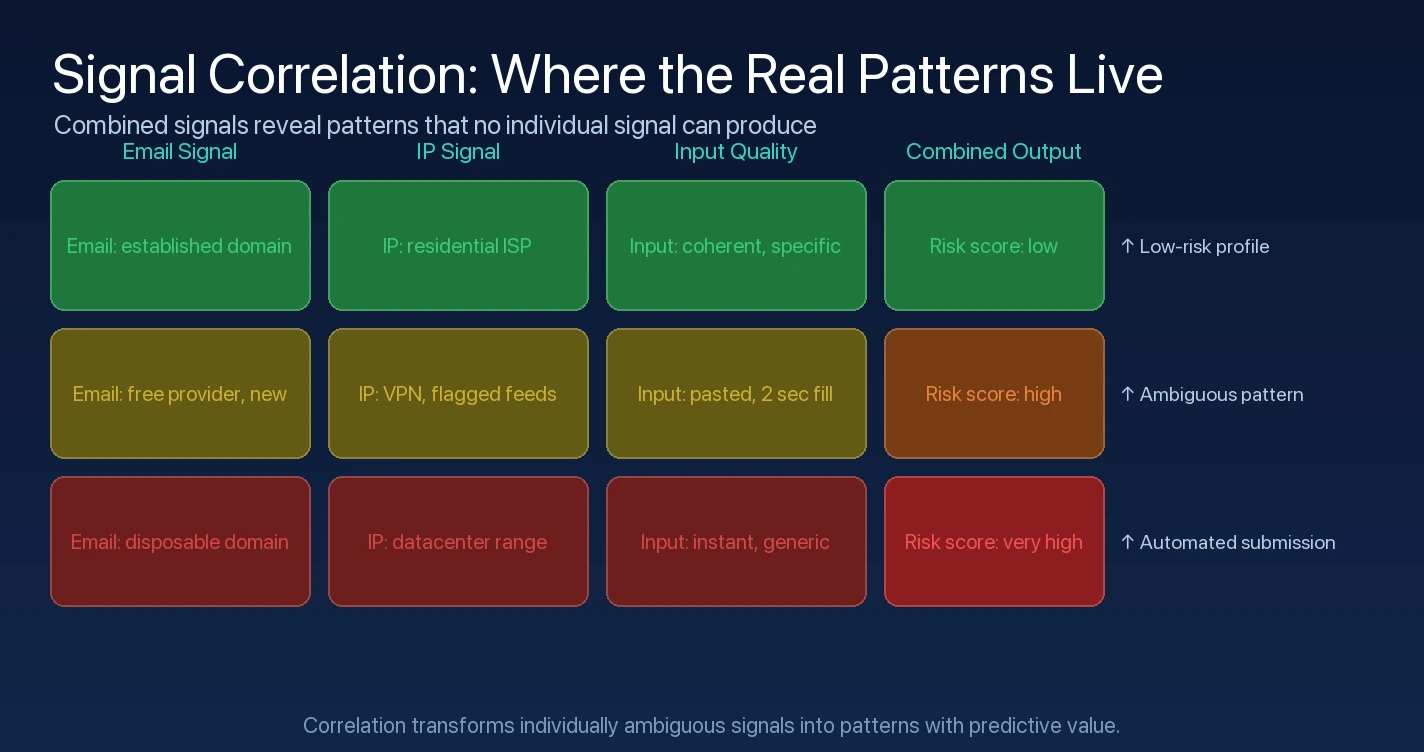
Earlier trust layers help by:
- scoring submissions before users build risky histories
- correlating behavioral and identifier signals across sessions
- surfacing suspicious patterns before checkout or payout
- reducing noise so downstream reviews focus on the highest-risk cases
- preserving a cleaner trust graph for investigations
That does not eliminate downstream fraud checks. It makes them more effective.
How Opportify Helps
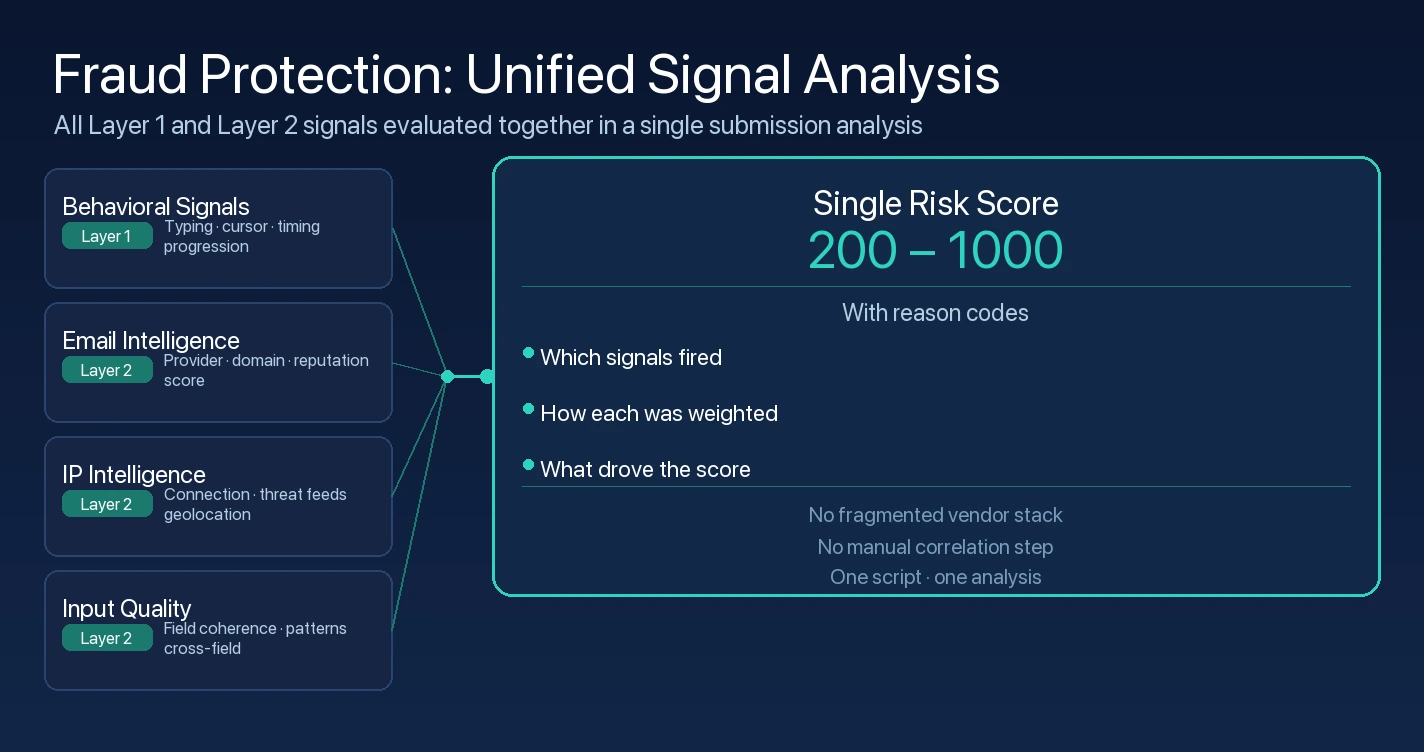
Opportify’s Fraud Protection operates earlier in the lifecycle, where the most useful signals are still visible.
It detects fake leads, low-quality submissions, form spam, and bad bots by analyzing every submission across 100+ signals, including behavior, email, IP, device, and more. That makes it easier to identify risky users before they reach the transaction layer.
For teams that want a more technical framing, the product functions as a unified pre-onboarding trust layer that evaluates submissions before they enter your system. It is available as either:
- Form Fraud Protection for client-side integration
- Fraud Protection API for server-to-server scoring
The practical benefit is straightforward: better upstream scoring gives transaction teams more context, less noise, and earlier intervention points.
Getting Started With a Better Trust Model
If your current fraud program starts at the transaction layer, use this sequence to expand it:
- Map the earliest point where users enter your system
- Identify which signals are visible before checkout or monetization
- Separate behavioral, identifier, and transaction signals
- Score earlier events so downstream systems inherit trust context
- Review transaction alerts in the context of upstream risk
This approach gives your team a cleaner operating model. Instead of asking, "What went wrong at checkout?" you can ask, "Where did the trust breakdown begin?"
Key Takeaways
- Transaction fraud is usually a downstream symptom, not the first sign of abuse
- The transaction layer works best when it receives upstream trust context
- Fraudsters often build trust before they monetize
- Early scoring reduces noise and improves downstream investigations
- Identifier Trust Layers help teams think across the full lifecycle, not just the loss event
If you want a broader view of the framework, read the earlier posts in the series and see how each layer contributes to the full trust stack.